Overexpression of Mitochondrial Fission or Fusion Genes Enhances Resilience and Extends Longevity
2026-11-09 16:07
Keywords: mitochondria; mitochondrial dynamics; DRP-1; FZO-1; EAT-3; biological resilience; stress resistance; lifespan; Caenorhabditis elegans
Introduction
Mitochondria are best known as the cell's power plants, yet their roles extend far beyond ATP production: they buffer calcium, generate redox signals, sponsor autophagy, support innate immunity and orchestrate programmed cell death. Accordingly, defects in mitochondrial gene expression, redox homeostasis, respiratory-chain assembly or membrane structure contribute to age-associated diseases, including neurodegeneration, diabetes and cancer.
The mitochondrial network is equally dynamic. Single mitochondria continually connect to and separate from an interconnected web through fusion and fission. In C. elegans, the outer membrane is fused by the mitofusin homolog FZO-1 and the inner membrane by the OPA-1 homolog EAT-3, whereas fission proceeds through DRP-1 and its adaptors (FIS-1, FIS-2, MFF-1, MFF-2). Young, healthy worms carry tubular, well-organized networks; with age — and in models of neurodegenerative disease — the network becomes fragmented. A study in Aging Cell (2024) by Traa and colleagues in Jeremy Van Raamsdonk's laboratory at McGill University asked a simple question with a surprising answer: if aging fragments the network, would boosting fission or fusion capacity restore a youthful network — and would that extend lifespan?
SunyBiotech-Generated C. elegans Strains
Three overexpression strains were generated to test whether increasing fission or fusion capacity enhances resilience and extends longevity. The coding sequences of drp-1, eat-3 and fzo-1 were each placed under a ubiquitous promoter (eft-3p, pro-1p or rpl-28p), and every strain carries a distinct tissue-specific fluorescent marker (muscle, pharynx or intestine) so that strains can be crossed without altering expression levels. Transgenes were introduced by microinjection, integrated by γ-irradiation and backcrossed five times to N2; two independent integrated lines per construct ensured that phenotypes were attributable to the transgene rather than the insertion site.
drp-1 OE: sybIs3765 [eft-3p::drp-1::unc-54 3′UTR + myo-3p::mCherry]
eat-3 OE: sybIs3770 [pro-1p::eat-3::unc-54 3′UTR + vha-6p::mCherry]
fzo-1 OE: sybIs3776 [rpl-28p::fzo-1::unc-54 3′UTR + myo-2p::mCherry]
PHX5099 (overexpression control): sybIs5099 [rpl-28p::HTT(Q19)::wrmScarlet::unc-54 3′UTR]
Overexpression of either fission or fusion genes causes mitochondrial fragmentation
qRT-PCR confirmed elevated transgene transcripts in each strain at day 1 of adulthood, with fusion-gene lines expressing roughly four times more transgene mRNA than the drp-1 line, and expression remaining elevated at day 8. Counter-intuitively, overexpressing the fusion genes did not elongate the network: at day 1 of adulthood, drp-1 OE, fzo-1 OE and eat-3 OE animals all showed significant mitochondrial fragmentation in body-wall muscle — more mitochondria, smaller area, higher circularity and shorter length (Figure 1 a and b). By day 8, despite continued overexpression, mitochondrial morphology in all three strains was indistinguishable from wild type. Function followed a more complex, age-dependent pattern: eat-3 OE increased oxygen consumption and ATP content at day 1 but reduced both by day 8, while drp-1 OE showed a non-significant decreased both measures in young adults yet was associated with higher ATP at day 8 (Figure 1 c and d).
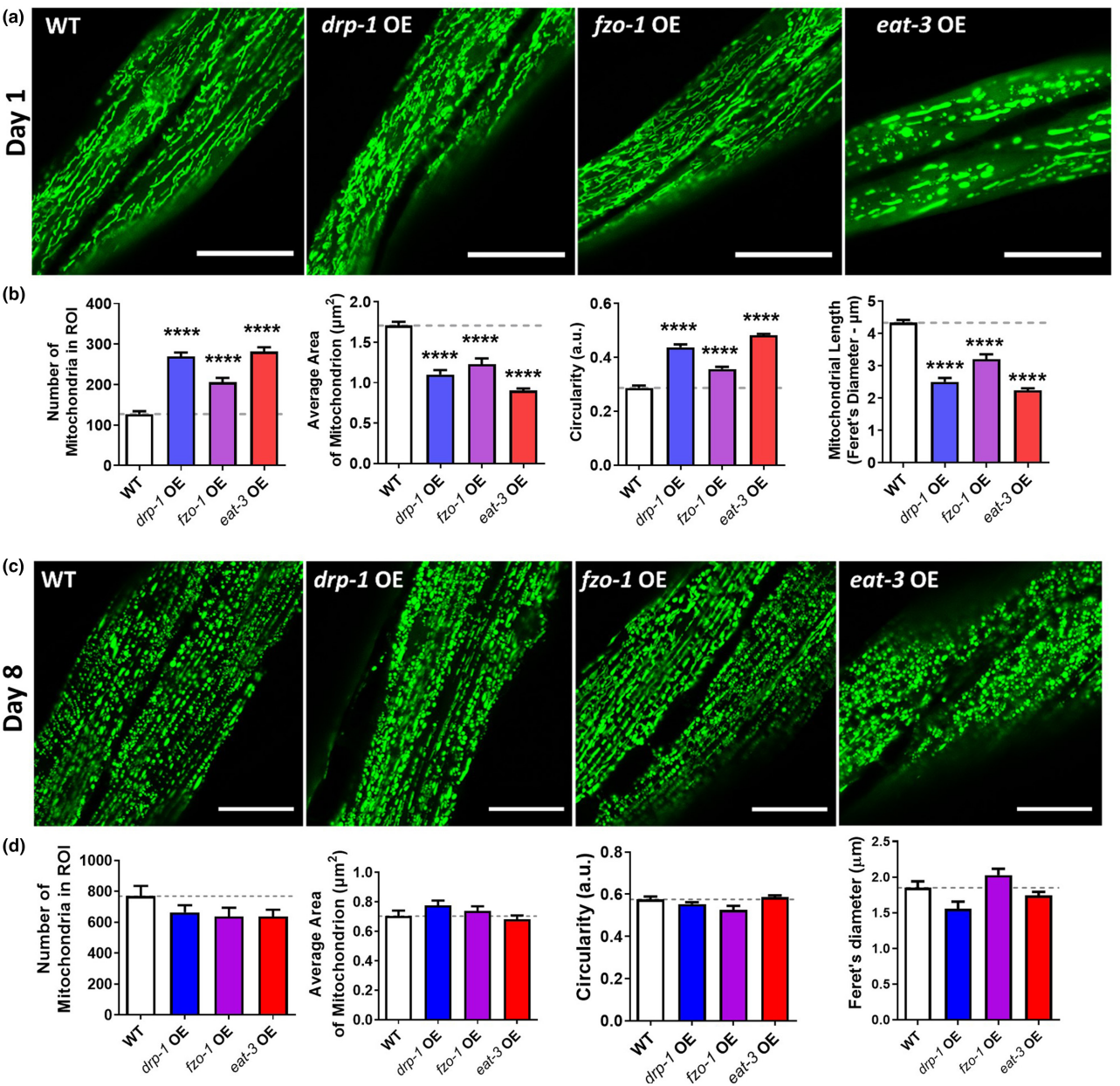
Figure 1. Overexpression of drp-1, fzo-1 or eat-3 causes mitochondrial fragmentation at day 1 of adulthood (a, b); by day 8, the networks of all strains resemble wild type (c, d).
Both fission and fusion overexpression extend lifespan and buffer exogenous stress
Overexpression of the fusion genes fzo-1 and eat-3 increased resistance to all six exogenous stressors tested — heat (37 °C), osmotic (NaCl), acute oxidative (juglone), chronic oxidative (paraquat), anoxic and bacterial-pathogen (P. aeruginosa PA14) stress — with eat-3 OE consistently the strongest, followed by fzo-1 OE and then drp-1 OE; drp-1 OE increased resistance to all stressors except acute oxidative and bacterial-pathogen stress, where survival was equivalent to the control (Figure 2). Worms overexpressing an unrelated control protein did not share these phenotypes, so the enhanced survival is specific to mitochondrial dynamics genes rather than overexpression in general.
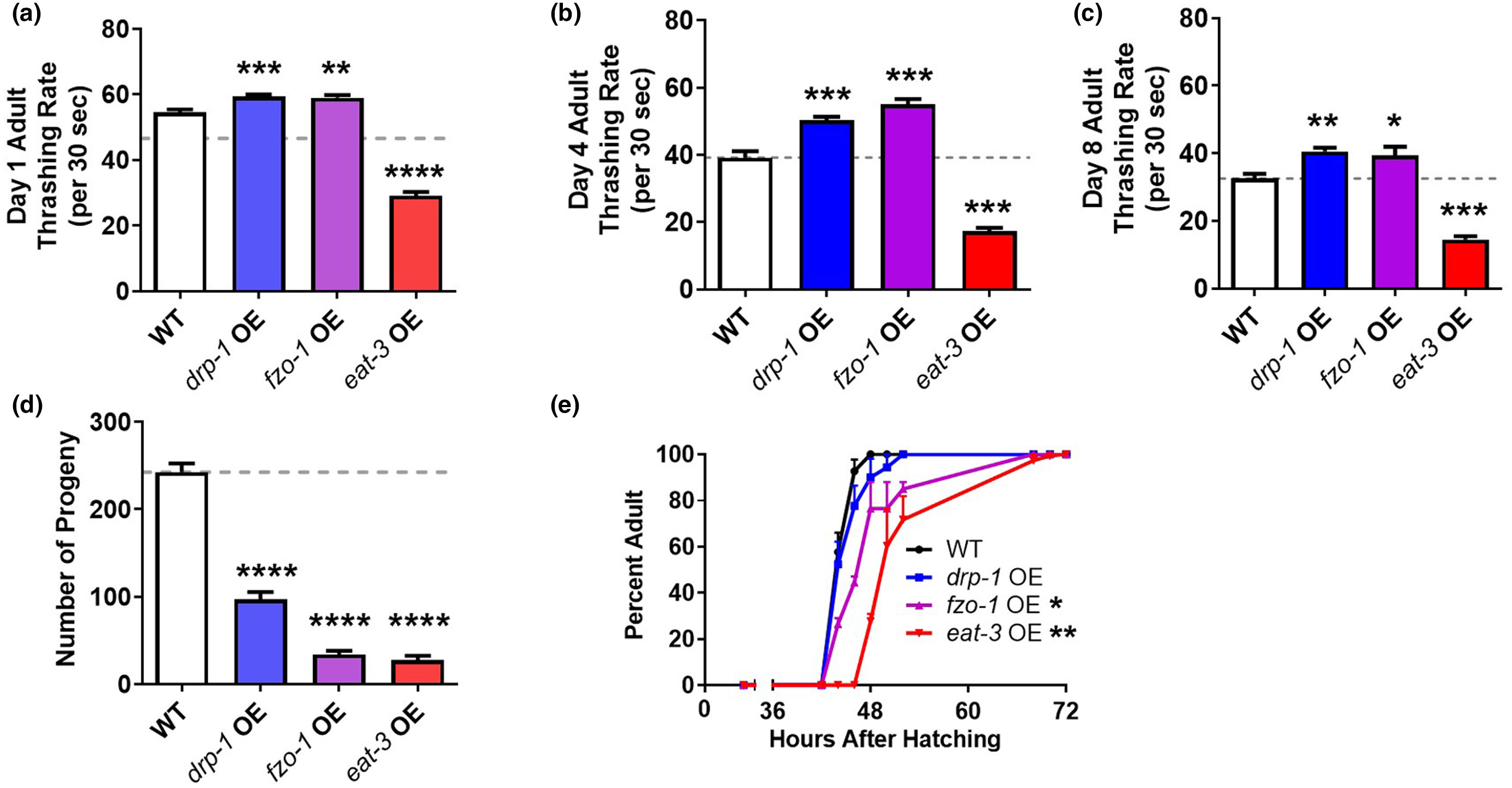
Figure 2. Resistance of the OE strains to heat, osmotic, acute and chronic oxidative, anoxic and bacterial-pathogen stress.
Lifespan pointed the same way. eat-3 OE and fzo-1 OE nearly doubled wild-type lifespan, drp-1 OE also significantly extended life, and the overexpression-control strain lived only slightly longer than wild type (Figure 3). The physiological trade-offs were specific and measurable: all three OE strains had reduced brood size, eat-3 OE showed a lower thrashing rate at days 1, 4 and 8, and fzo-1 or eat-3 overexpression slowed post-embryonic development — deficits the control strain did not display.
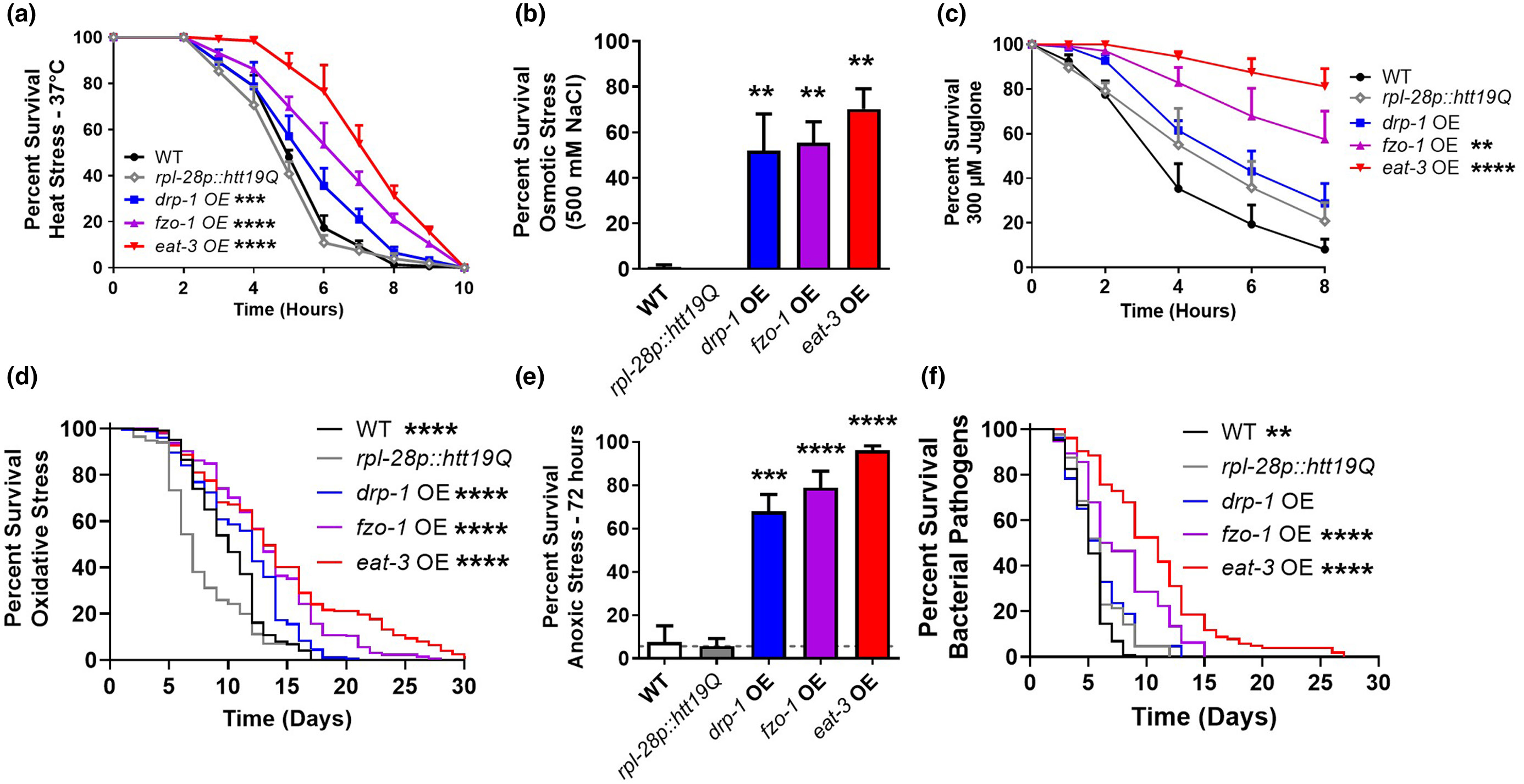
Figure 3. Lifespan extension by drp-1, fzo-1 and eat-3 OE versus wild type and the overexpression control.
Cellular resilience pathways are activated, and DAF-16 is required for longevity
At the molecular level, eat-3 OE upregulated targets of the DAF-16-mediated stress response (mtl-1, sod-3, dod-3), the p38-mediated innate immune pathway (sysm-1) and the SKN-1-mediated oxidative stress response (gst-4); fzo-1 OE reached significance for the SKN-1 target, while neither drp-1 OE nor the control strain activated these pathways. The same stress-response genes remained elevated at day 8 of adulthood (Figure 4).
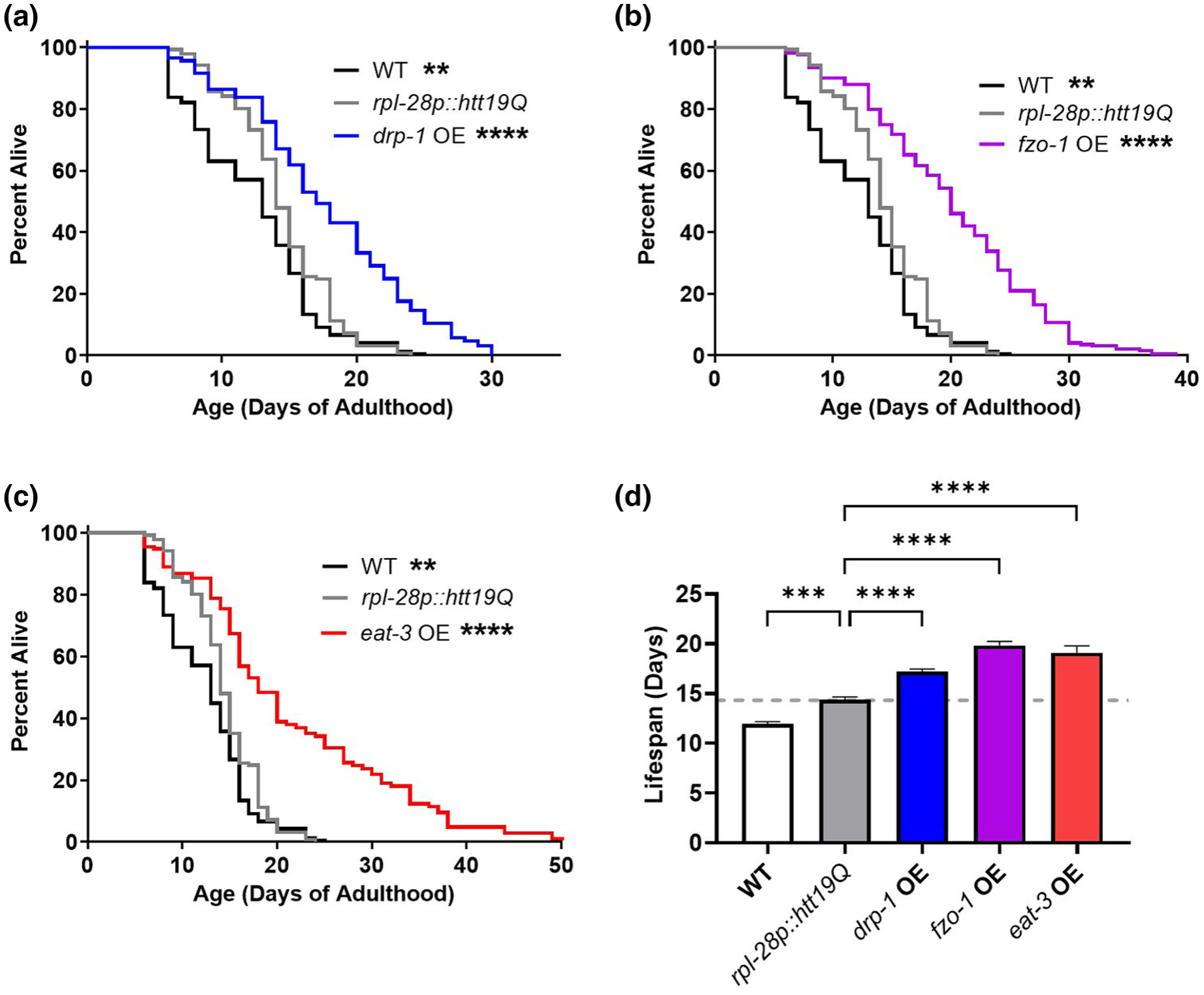
Figure 4. Overexpression of mitochondrial fission or fusion genes extends lifespan.
RNAi epistasis then mapped which pathways matter. Knockdown of daf-16 largely abolished the lifespan extension of fzo-1 OE and eat-3 OE worms(Figure 5 e and f); hsf-1 knockdown shortened their lives without eliminating the extension(Figure 5 c and e); knockdown of atfs-1, sek-1 or skn-1 had no effect on lifespan — while no single pathway was required for the stress resistance of eat-3 OE worms (Figure 5).
Finally, combining fission and fusion overexpression was not better than either alone: drp-1 OE failed to restore network morphology in the fzo-1 or eat-3 background, and double and triple overexpression strains showed diminished stress resistance and shorter lifespans than eat-3 OE worms.
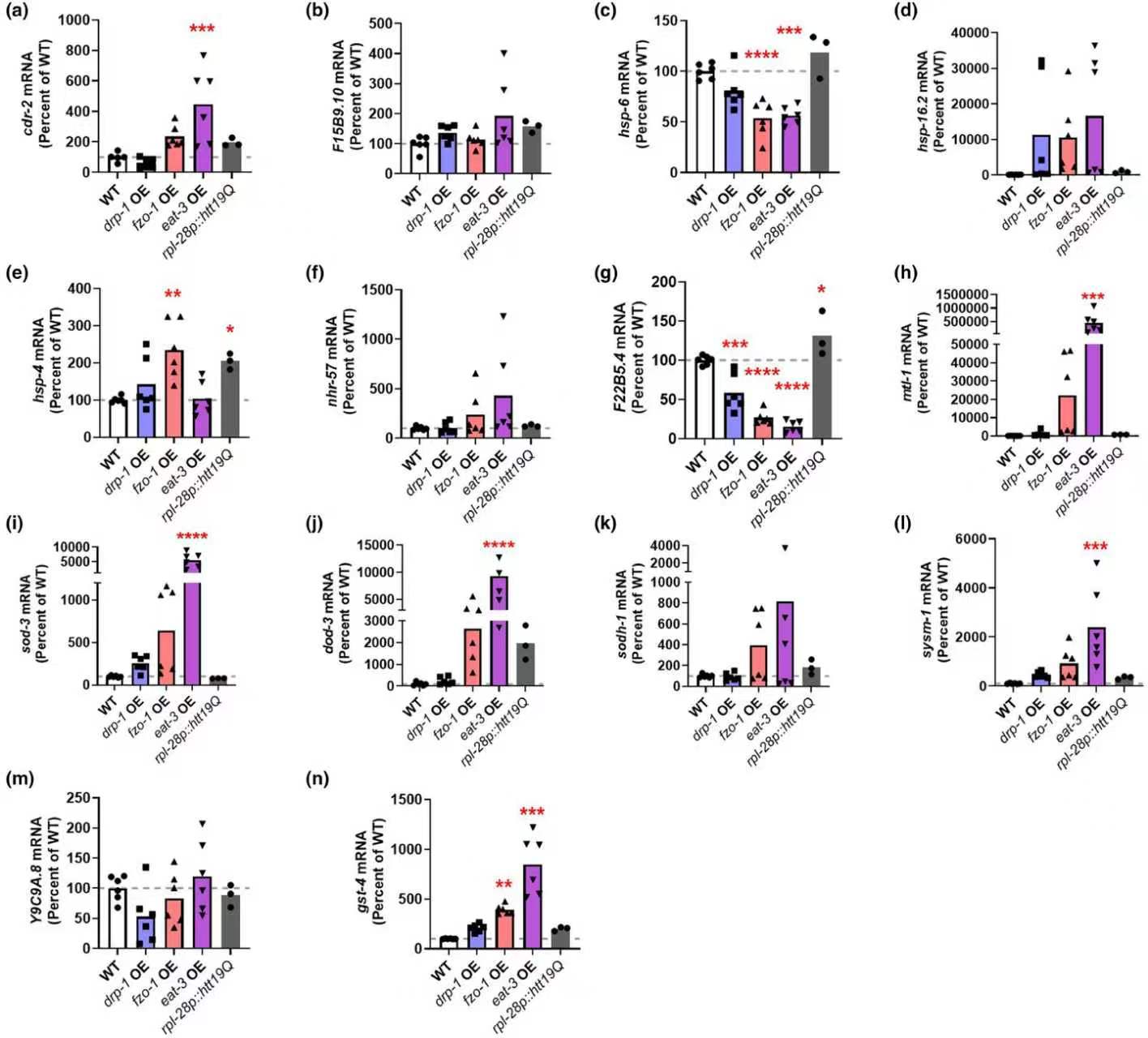
Figure 5. Overexpression of mitochondrial fusion genes activates multiple pathways of cellular resilience.
Conclusion
This study demonstrates that enhancing either mitochondrial fission or fusion capacity is sufficient to extend C. elegans lifespan and broadly increase stress resistance — and, unexpectedly, that these benefits do not require maintenance of a youthful mitochondrial network. The authors propose a hormetic mechanism: imbalanced expression of mitochondrial dynamics genes activates pro-survival programs, with the DAF-16-mediated stress response required for the longevity of fusion-overexpression strains. The work reframes mitochondrial dynamics as a resilience lever for aging research and sets up the next question — whether drp-1 overexpression can further extend the lives of already long-lived mutants such as daf-2.
Reference
Traa A, Keil A, AlOkda A, Jacob-Tomas S, Tamez González AA, Zhu S, Rudich Z, Van Raamsdonk JM. Overexpression of mitochondrial fission or mitochondrial fusion genes enhances resilience and extends longevity. Aging Cell. 2024;23:e14262. https://doi.org/10.1111/acel.14262
Need custom overexpression, reporter or knock-in C. elegans strains — like the drp-1, fzo-1 and eat-3 lines used in this study? Contact SunyBiotech (service@sunybiotech.com) to learn how our C. elegans strain generation services can support your aging and mitochondrial research. SunyBiotech provides high-quality, efficient CRISPR-Cas9 edited C. elegans, together with traditional transgenic, Mos1 insertion and preclinical assay services — more than 10,000 strains delivered with a 99.9% success rate, an average turnaround of 56 days, and trust from 500+ publications worldwide.